
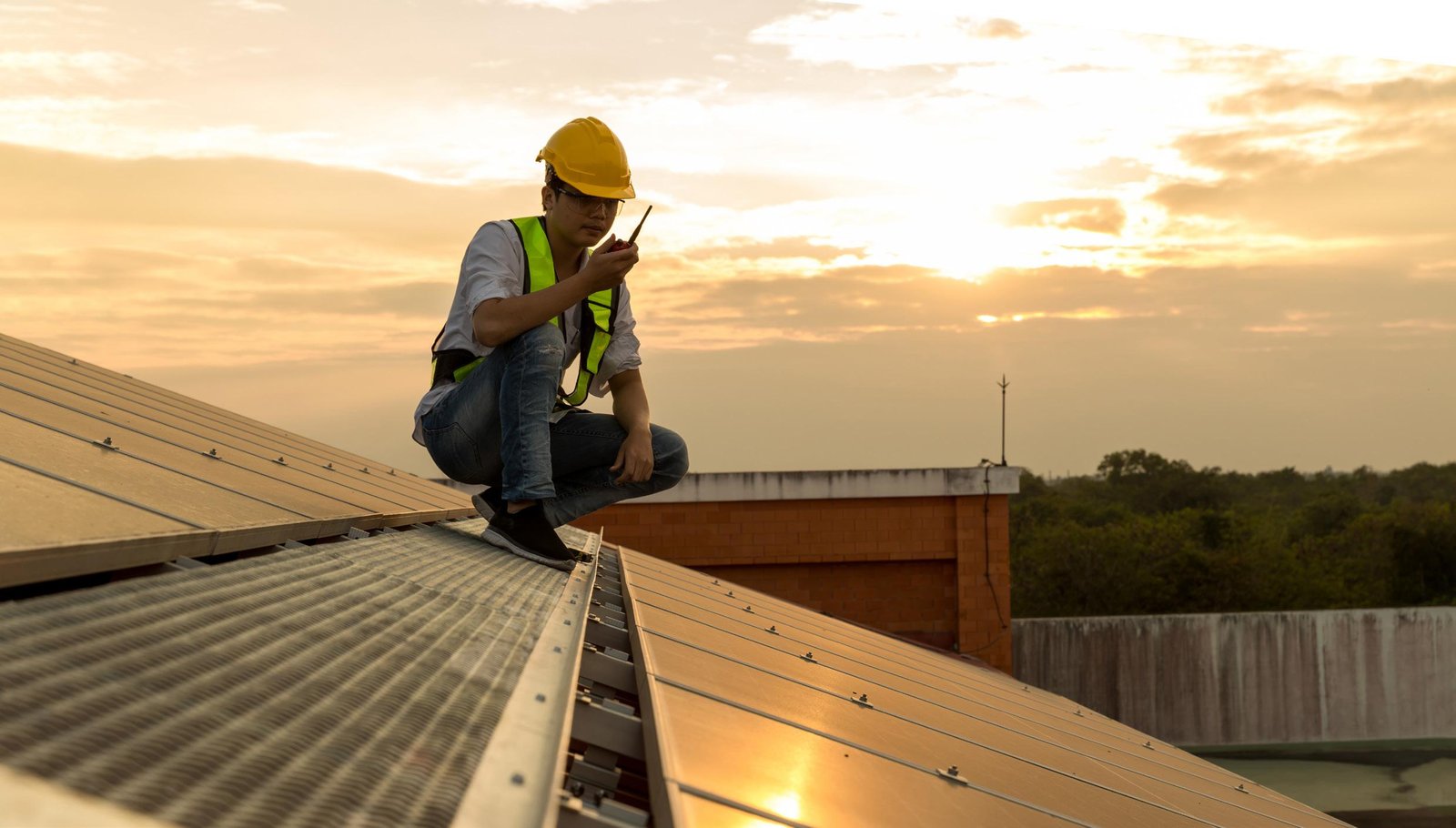
These days, everyone is saying to play it safe in your career. But no one is telling you that in 2026, there will be no such thing as safe. AI is now handling coding jobs. Bots have arrived for marketing, and chatbots are handling customer service. So the question arises: what will remain in the future? And this is a sector where 3.5 million new jobs will be created in India alone by 2030. And these are jobs that AI can never replace. Because as long as the sun shines, solar panels will be installed, and as long as panels are installed, there will always be a need for people to install, maintain, and design them. And the most interesting thing is that this field is open to everyone, from 10th-grade passouts to engineering graduates. In fact, the government itself is providing free training and certifications, and the opportunities are unlimited.
So, if you’re confused about what to do next or want to learn a future-proof skill that keeps you relevant, the next 12 minutes are very useful because today I’m going to show you a complete road map for where to take the course, how to get a certification, and how you can launch a career in this field. Watch the blog until the end because in the end, I’ll also share a secret resource that very few people know about. So let’s get started and welcome to Skills, India’s most relatable career channel. But friends, before we dive into the blog, let me make one thing clear. When I talk about solar energy, many people think it’s an environmental movement.
Save the planet, save trees, reduce pollution, etc. But the reality is very different. Solar energy is no longer just an environmental topic. It’s becoming the backbone of India’s economy. Because, look, the World Economic Forum’s 2025 report states that the green transition is one of the world’s top three most transformative trends. This means that globally, by 2030, 170 million new jobs will be created in the green sector alone. And India has already reached third place in this race as a solar energy producer, behind China and the USA.
So, now that such a massive transformation is taking place in our country, jobs will inevitably be created, and these jobs are not just in metros but also in tier-2 cities. But there’s a problem here. The problem is that there’s a severe shortage of skilled professionals. The government is setting a target of producing 500 gigawatts of renewable energy by 2030. Through the Pradhan Mantri Surya Ghar Yojana, 10 million households are to be provided with free solar panels. But who will install them? Who will install them? And who will maintain them?
This is the gap the government wants to address, and that’s why they’ve launched some amazing training programs that are completely free. So, If you think this field is only for IITians or engineers, you’re completely wrong. And if you think starting a business requires a huge investment, you’re wrong too. I’ll show you step by step what the reality is and how you can enter this field with zero investment so you can be part of the solar revolution. Otherwise, five years down the line, you’ll regret not taking action when the opportunity was there. Let’s first clear up some myths that often linger in people’s minds. First, solar is only for engineers or those with a technical background. Absolutely wrong. Look, there are many roles in the solar sector. Yes, there are engineering positions like solar project engineers and design engineers, but that’s just a small part. You don’t need an engineering degree to do installation work.
Tenth-grade students, ITI scholars, and technicians can also pursue this course. Even 12th-grade students can receive specialized training. Practical skills matter most in installation. Where to place panels, how to do wiring, and what safety precautions are required. All of this is learned through hands-on training, and government courses help. Platforms like Solar Pathshala offer comprehensive training in Hindi, and you can access it on your mobile phone. So, the myth that this field is only for engineers is nonsense. A certificate has no value; you just need a degree. This is also false, friends. In a skill-based industry, certifications are highly valued.
Especially when the certificate is government-authorized. For example, Solar Pathshala falls under the Ministry of New and Renewable Energy (MARE). This means it’s an official platform of the central government. So, when you complete a certification from here, it’s nationally recognized. And when you include it on your resume, it carries significant weightage. Employers see that you’ve received government-certified training. This means you’ve followed standards. It’s quality assurance. And whether it’s the PM Kushum Scheme or the Scholar Rooftop Scheme, these certifications are also useful for becoming authorized vendors on government projects.
So, a degree is valuable, but certification in practical fields is just as valuable, sometimes even more so. Myth number three: solar businesses require a lot of investment. This is the biggest misconception. Listen, if you’re thinking of becoming a vendor, meaning you’ve started your own solar installation business, then yes, it is. Some investment is required for equipment and inventory. But that doesn’t mean millions of rupees. You can start small. You can form local partnerships. make this artile to uniquee post You can leverage government schemes. But the most important thing is that all this comes later. First, you need to become skilled, undergo training, and earn certification so that you can enter the job market or become capable of starting a business. And this training is completely free. So, forget about investment. Build skills first.
Everything else will fall into place automatically. And the fourth myth is that people think solar only works in metro cities or urban areas. The reality is quite the opposite. And actually, there is a greater demand for solar energy in rural areas. This is because many villages still face electricity crises. Grid connections are weak there and power cuts are frequent, making installing solar panels there a very practical option. Therefore, the government is also focusing on increasing solar penetration in rural areas. So, if you’re from a tier-two or tier-three city or village, this is even more relevant for you because demand is highest in your area. Now that the basic myths are cleared, let’s talk about opportunities. Once you’ve trained in the solar field and earned a certification, three main avenues open up for you.
First, job opportunities, i.e., the job market. The roles here are diverse: solar installer, solar technician, maintenance specialist, project coordinator, survey engineer, and more. And in the private sector, Tata Power, Reliance, and Adani are all investing heavily in renewable energy and constantly hiring skilled professionals. Furthermore, there are openings in the government sector as well. SECI, the Solar Energy Corporation of India, regularly posts job postings and also hires state-level renewable energy agencies. So, as I suggest, go to Lindin and search for “solar technicians in India.” You’ll find hundreds of job listings, as new postings are added daily because there’s a real demand.
All you need is a little skilled manpower, and when supply is low and demand is high, opportunities are automatically created. Another path is entrepreneurship, which means starting your own business. So, if you don’t want a job and want to do something on your own, you can start a solar installation agency. The model is simple: you can install, design, and commission solar systems for residential or commercial clients. And I recommend leveraging government schemes. For example, under the PM Surya Ghar Yojana, households are getting subsidized solar panels. You can become an authorized installer. So, build a solid network at the local level. Tie up with electricians. Go and bid on municipal contracts.
But all of this is only possible if you have certification, skills, and government-approved training. Only then will you be able to become an authorized vendor. Only then will clients be able to trust you. Number three: become an authorized partner in government schemes. Look, the PM KUSUM scheme is for solar pumps and grid-connected solar power plants for farmers. Authorized vendors are registered under this scheme. There’s also a solar rooftop scheme, where registered installers get preference. This means the government directly allocates projects to you if you’re qualified. And the first requirement for qualifications is certified training to ensure quality assurance and maintain standards. So, these are the three main components for you: job, business, or government projects. And the starting point for all is proper training and certification. So, let’s quickly take a step-by-step look at where to get this training, which courses are available, and how to access them. The first option is Solar Pathshala by MARE.
This is MARE, the Ministry of New and Renewable Energy, the official online training platform of the Government of India. It’s free and, best of all, available in Hindi. It offers many courses at different levels. For example, there’s a business course. If you want to start a business in the solar industry, whether you want to acquire a dealership, distributorship, or open an installation agency, this course teaches you end-to-end planning. Plus, how to partner with a company? How to build a customer base? Everything. Then there’s the technical design course. In this course, you’ll learn how to design a solar PV system? What should its sizing be?
How to select equipment? How to perform engineering calculations? And all of this is definitely a little more advanced than that, but it’s very valuable. The third course is Survey and Performance Analysis. It focuses on analyzing the performance of existing solar plants, performing maintenance, and identifying faults. The fourth and most important course is Installation, Commissioning, and Inspection of Solar PV Systems. It’s a complete guide to practical installation. Everything from wiring and safety procedures to post-installation testing is covered in detail. And the best part is, at the end of each course, you’ll find a guide to governance.