Smart Strategy to Crack the Bank Clerk Exam in India

Smart Strategy to Crack the Bank Clerk Exam in India
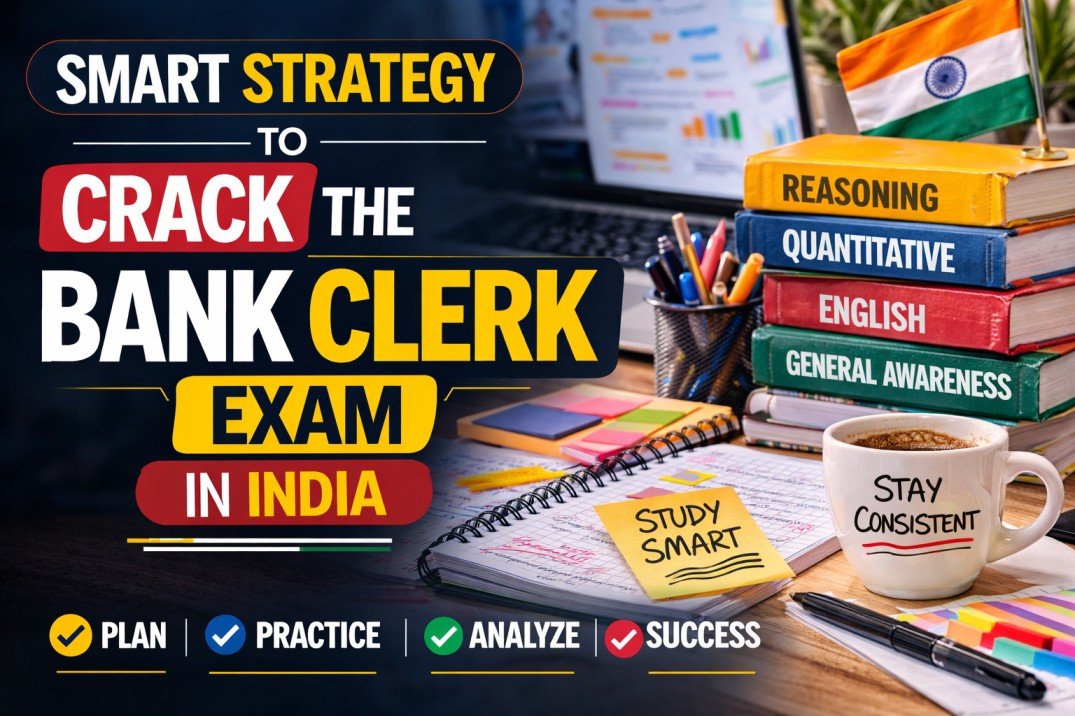
Starting a career as a financial professional is an exciting dream for many young students today. While competition feels tough, having a solid plan makes a huge difference for your success. Effective Bank Clerk Exam Preparation requires more than just long hours of studying books. It involves understanding tricky patterns and managing your time well during every practice session. We know how stressful this journey can be when thousands are fighting for the same spot. However, passing these hurdles becomes much easier with a clear and positive mindset. This guide will help you navigate through this noise with a truly smart strategy. You can achieve your goals by focusing on specific topics instead of trying to learn everything. Let’s explore how you can land that stable government job and start your new life. Key Takeaways : Smart Strategy to Crack the Bank Clerk Exam in India Understanding the Bank Clerk Exam Structure and Pattern Understanding the intricacies of the Bank Clerk Exam pattern is crucial for aspirants to devise an effective preparation strategy. The Bank Clerk Exam is conducted in multiple stages, with the preliminary examination being the first hurdle. Preliminary Examination Breakdown The preliminary examination is typically an online test that serves as a screening process. It usually consists of three sections: Reasoning Ability, Numerical Ability, and English Language. The number of questions and time duration may vary across different banking institutions. Main Examination Components The main examination is more comprehensive and assesses a candidate’s knowledge and skills in greater depth. It often includes sections on General/Financial Awareness, General English, and Reasoning & Computer Aptitude, among others. Marking Scheme and Negative Marking Details The marking scheme for the Bank Clerk Exam varies across different banks. Generally, candidates are awarded one mark for each correct answer, and there is a negative marking for incorrect answers, usually a deduction of 0.25 or 0.50 marks. Understanding the marking scheme and negative marking details is crucial for maximizing scores. Aspirants should strategize their attempts, balancing the need to answer as many questions as possible while minimizing incorrect responses. Essential Eligibility Criteria You Need to Know The journey to becoming a bank clerk begins with meeting the essential eligibility criteria. To apply for the Bank Clerk Exam, candidates must fulfill certain requirements set by the banking institutions. Educational Qualifications and Requirements The educational qualifications for the Bank Clerk Exam typically include a bachelor’s degree in any discipline from a recognized university. Some banks may also specify a minimum percentage of marks required in the qualifying examination. Key Educational Requirements: Smart Strategy to Crack the Bank Clerk Exam in India Age Limits and Category-wise Relaxations The age limit for the Bank Clerk Exam varies among banks, but generally, candidates between 18 and 28 years are eligible to apply. There are relaxations in the upper age limit for candidates belonging to reserved categories. Category Age Relaxation General No relaxation SC/ST 5-10 years OBC 3-5 years Persons with Disabilities (PwD) 10-15 years It’s essential for candidates to check the specific eligibility criteria for the bank they are applying to, as these can vary. Smart Strategy to Crack the Bank Clerk Exam in India A smart strategy is crucial for cracking the Bank Clerk Exam in India, and it begins with a personalized study plan. To achieve success, it’s essential to understand the exam’s structure and tailor your preparation accordingly. Creating Your Personalized Study Blueprint Creating a Personalized Study Blueprint involves understanding your strengths and weaknesses. Start by assessing your current knowledge level and identifying areas that need improvement. Make a list of all the topics you need to cover and allocate time to each based on their importance and your proficiency. Setting Achievable Goals and Monthly Milestones Setting Achievable Goals is vital for maintaining motivation throughout your preparation journey. Break down your study plan into monthly milestones to track your progress effectively. These milestones should be challenging yet realistic, allowing you to stay focused and adjust your strategy as needed. Balancing Speed with Accuracy for Maximum Scores Balancing speed with accuracy is critical in the Bank Clerk Exam. Practice under timed conditions to enhance your speed without compromising accuracy. Regular practice with mock tests will help you achieve this balance. The 80-20 Rule for Exam Preparation The 80-20 Rule suggests that 80% of your results come from 20% of your efforts. Identify the most critical topics and focus on them to maximize your score. This rule helps in optimizing your study plan, ensuring that you allocate your time effectively. Progressive Learning Techniques Progressive Learning Techniques involve gradually increasing the difficulty level of your study materials. This approach helps in reinforcing previously learned concepts while challenging you with new ones. Using a combination of study materials and online resources can facilitate progressive learning. Mastering Quantitative Aptitude for Maximum Marks Mastering the Quantitative Aptitude section is crucial for achieving maximum marks in the Bank Clerk Exam. This section tests a candidate’s mathematical skills and ability to solve problems quickly and accurately. To excel in this section, it’s essential to focus on key areas such as Number Systems, Data Interpretation, and Advanced Arithmetic Problem Solving. By strengthening these areas, candidates can significantly improve their overall score. Number Systems and Simplification Tricks … Read more
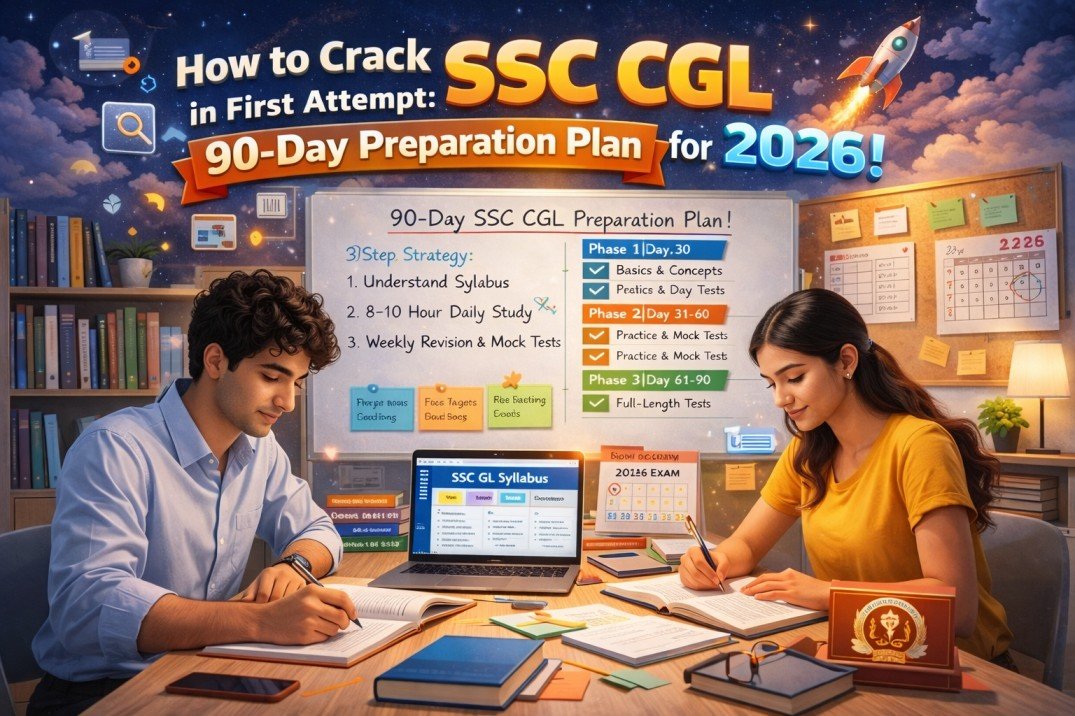
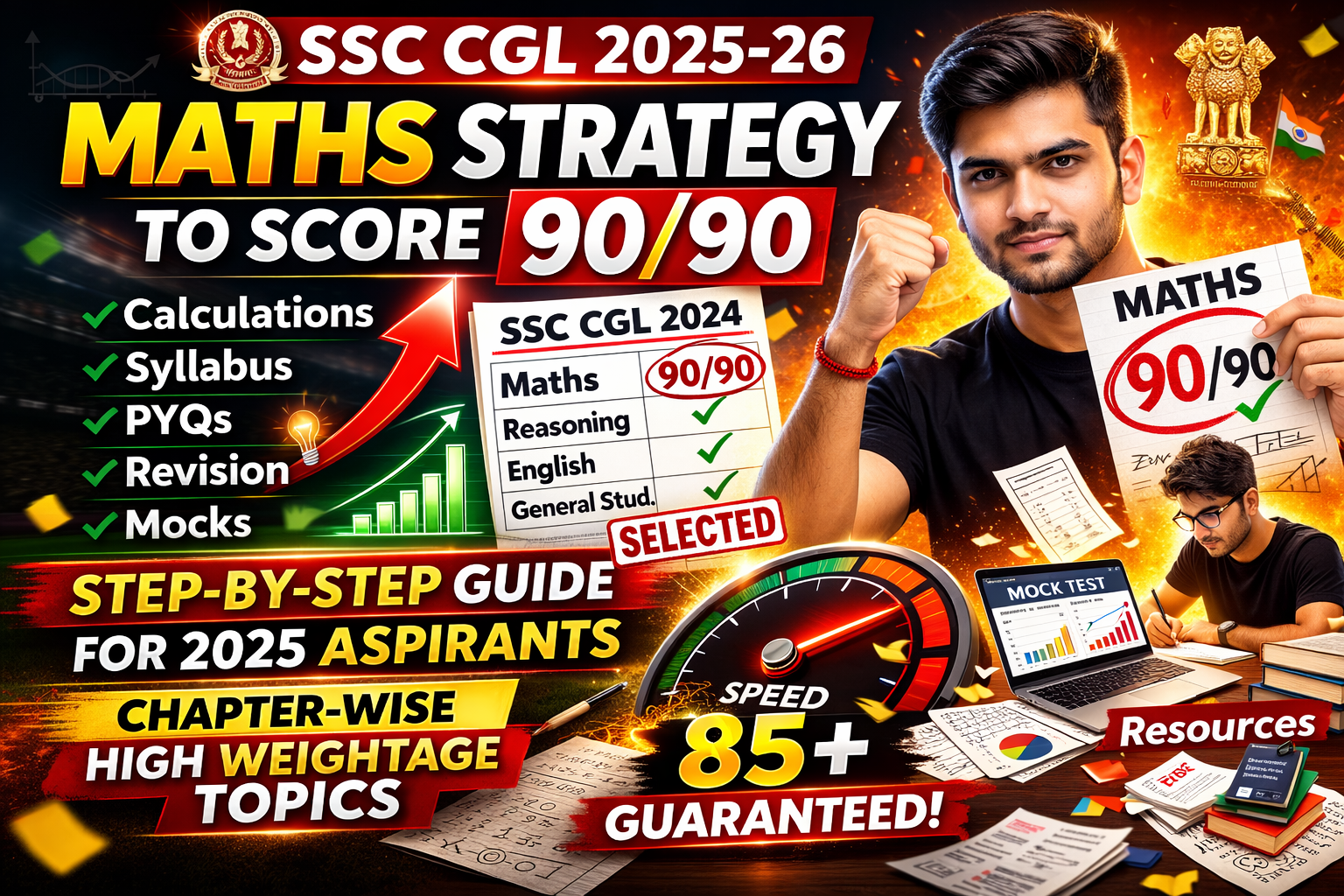
How to crack SSC CGL in first attempt get 90 day plan

How to crack SSC CGL in first attempt get 90 day plan

Starting a new career path feels exciting yet challenging for many ambitious candidates seeking professional advancement. Many students dream of passing this competitive government exam on their very start to secure a stable future. A solid strategy makes all the difference when you want proven results in your career today. Success requires more than just hard work and individual dedication. It demands a structured 90-day study plan covering the entire comprehensive syllabus. Using high-quality exam resources ensures you stay ahead of others during the rigorous selection process. Focus on consistency and frequent goals reaching your peak performance during these months. You can achieve your goals with the right mindset and necessary tools. This guide provides a clear roadmap for success. Staying organized helps reduce stress during the learning process significantly. Monitoring progress remains vital while adjusting your schedule regularly based on your needs. Let’s dive into the details. Key Takeaways : How to crack SSC CGL in first attempt get 90 day plan Understanding the SSC CGL Exam Structure The SSC CGL exam is not just about knowledge; it’s also about understanding its intricate structure. To crack it in the first attempt, one must delve into the details of its various components. Exam Tiers and Their Importance The SSC CGL exam is conducted in multiple tiers, each designed to test different aspects of a candidate’s abilities. These tiers are: Each tier has its significance, and understanding the format and content of each is crucial for effective preparation. Marking Scheme and Time Allocation The marking scheme and time allocation vary across tiers. For instance, Tier I is a computer-based test with negative marking for incorrect answers, while Tier II has different papers with varying marking schemes. Key aspects to focus on: How to crack SSC CGL in first attempt get 90 day plan Eligibility Criteria and Age Limits Before diving into preparation, it’s essential to check if you meet the eligibility criteria and are within the age limits set by the SSC for the CGL exam. Eligibility criteria include: Why a 90-Day Plan Works for SSC CGL Preparation Cracking the SSC CGL in the first attempt is a challenging task, but with a well-structured 90-day plan, aspirants can significantly enhance their chances of success. The key to this success lies in understanding the effectiveness of intensive short-term preparation. The Science Behind Short-Term Intensive Preparation Short-term intensive preparation, like a 90-day plan, leverages the psychological aspect of focused learning. When candidates dedicate themselves to a rigorous study schedule, they can achieve a high level of concentration and retention. This approach helps in quick revision and practice, which are crucial for exams like SSC CGL. Success Stories from First-Time Qualifiers Many candidates have successfully cracked the SSC CGL in their first attempt using a 90-day plan. Their stories highlight the importance of strategic planning and consistent effort. For instance, a candidate might focus on weak areas and improve them significantly over the 90 days. Candidate Strategy Outcome Candidate A Focused on weak areas Qualified SSC CGL Tier I Candidate B Intensive practice Scored high in Tier II Candidate C Regular mock tests Achieved overall success Setting Realistic Goals and Expectations To make the most of a 90-day plan, it’s crucial to set realistic goals. Candidates should assess their current level of preparation and identify areas that need improvement. By doing so, they can create a tailored study plan that addresses their weaknesses. How to Crack SSC CGL in First Attempt Get 90 Day Plan: Complete Breakdown To ace the SSC CGL exam in one attempt, a focused 90-day preparation strategy is essential. This section provides a comprehensive breakdown of how to structure your study plan over 90 days to ensure you’re well-prepared for the exam. Month 1: Building Strong Foundations (Days 1-30) The first month is crucial for building a strong foundation. It involves understanding the exam pattern and focusing on basic concepts. Week 1-2: General Intelligence and Reasoning During the first two weeks, concentrate on General Intelligence and Reasoning. This includes topics like analogies, coding-decoding, and logical reasoning. Practice these topics regularly to build a strong base. Week 3-4: Quantitative Aptitude Basics The next two weeks should focus on Quantitative Aptitude basics. Start with fundamental concepts such as arithmetic, algebra, and geometry. Regular practice will help in improving problem-solving skills. Month 2: Advanced Concepts and Practice (Days 31-60) The second month is about delving into advanced concepts and practicing them. Week 5-6: English Language Mastery Weeks 5 and 6 should be dedicated to mastering the English Language. Focus on comprehension, grammar, and vocabulary. Reading comprehension passages and practicing grammar exercises will be beneficial. Week 7-8: General Awareness Deep Dive … Read more

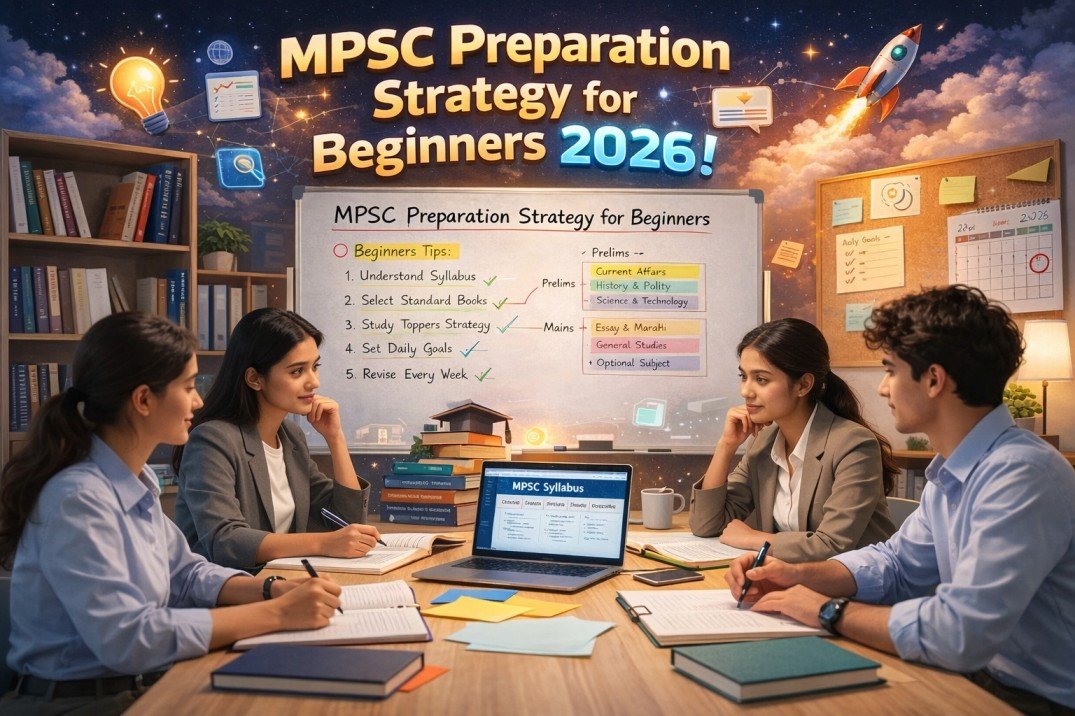
MPSC preparation strategy for beginners 2026

MPSC preparation strategy for beginners 2026

Starting a new journey feels exciting yet a bit overwhelming at times. You might wonder how to tackle this massive syllabus effectively. Having a solid plan is your first step toward reaching real success. Understanding the exam format helps you focus on what truly matters. It allows you to build a strong foundation without wasting precious time on irrelevant topics. A structured approach ensures you stay consistent every single day. A clear path makes the entire process enjoyable and very manageable for everyone. Let us dive into this beginner’s guide to MPSC to kickstart your journey today. You have the potential to achieve something truly great. With the right mindset, your MPSC 2026 preparation will lead you to incredible heights. Stay motivated and keep your eyes on the ultimate prize. Your dedication will surely pay off in the end. Key Takeaways Understanding the MPSC Examination Structure Understanding the MPSC exam structure is vital for effective preparation. The Maharashtra Public Service Commission (MPSC) conducts various exams to recruit candidates for different government positions in Maharashtra. What is MPSC and Why It Matters for Your Career The MPSC is a state-level organization responsible for conducting competitive exams to fill various government vacancies. Clearing the MPSC exam can open doors to prestigious government jobs, offering job security, social respect, and a chance to serve the community. Career Opportunities: The MPSC exam provides opportunities to work in various departments of the Maharashtra government, including administrative, technical, and other fields. Three Main Stages: Prelims, Mains, and Interview Explained The MPSC exam process typically consists of three stages: Preliminary Examination (Prelims), Main Examination (Mains), and a Personal Interview. Popular Positions You Can Aim For Through MPSC The MPSC exam offers a range of career opportunities in various fields. Some of the popular positions include: Position Description Deputy Collector A key administrative role involving policy implementation and management. Assistant Commissioner Involves administrative and revenue-related tasks. Sales Tax Inspector Responsible for ensuring compliance with tax laws. These roles not only offer a stable career but also the chance to make a meaningful impact on society. Eligibility Criteria and Important Dates for 2026 Understanding the eligibility criteria for MPSC 2026 is crucial for aspiring candidates. The Maharashtra Public Service Commission (MPSC) exam has specific requirements that candidates must fulfill to be eligible for the examination. Educational Qualifications You Need to Meet Candidates must possess a bachelor’s degree from a recognized university or institution to be eligible for the MPSC exam. The degree can be in any discipline, but it’s essential to check the specific requirements for the desired post, as some positions may require specialized qualifications. For instance, for certain technical or professional posts, candidates may need to have a degree in a relevant field such as engineering, medicine, or law. Post Required Educational Qualification Administrative Officer Bachelor’s degree in any discipline Technical Officer Bachelor’s degree in relevant engineering discipline Medical Officer MBBS degree Age Limits and Category-Wise Relaxations The MPSC exam has specific age limits for MPSC that candidates must adhere to. Generally, the minimum age limit is 18 years, and the maximum age limit varies depending on the category and the specific post applied for. Category-wise relaxations are provided as per government norms. For example, candidates from reserved categories such as SC/ST/OBC may get relaxations in the upper age limit. Critical MPSC 2026 Exam Dates to Remember Aspirants should be aware of the MPSC exam dates 2026 to plan their preparation accordingly. While the exact dates for 2026 are subject to change, candidates can refer to the previous year’s exam schedule for a rough idea. The MPSC exam typically consists of three stages: Prelims, Mains, and Interview. Candidates should mark their calendars for these critical dates and start preparing well in advance. Complete MPSC Preparation Strategy for Beginners 2026 To achieve success in the MPSC exam, beginners need a robust preparation strategy tailored to their needs. This involves understanding the exam’s structure, creating a study plan, and staying committed to their goals. Building Your Personalized Study Roadmap from Scratch Creating a study roadmap is the first step towards a successful MPSC preparation journey. It involves identifying the syllabus, gathering resources, and allocating time to each subject based on its weightage and your proficiency. Setting Achievable Goals and Monthly Milestones Setting clear, achievable goals is crucial for maintaining motivation and tracking progress. Break down your study plan into monthly milestones to stay focused. Key aspects to consider: How to Balance MPSC Preparation with Work or College Balancing MPSC preparation with other responsibilities requires effective time management. Create a schedule that accommodates your study time, work, or college commitments. Tips for balancing: Deciding Between Self-Study and Coaching Classes Choosing between self-study and coaching classes depends on your learning style, discipline, and resources. Both methods have their advantages and can be effective when used correctly. Consider the following: … Read more

Top 10 courses in 2026 that can help you get your first job faster

Top 10 courses in 2026 that can help you get your first job faster

Finding a path into a new profession feels overwhelming today. As technology moves quickly, staying ahead of the curve is essential for every newcomer. Investing within professional growth ensures people remain competitive as the landscape shifts. The current job market demands more than a degree. It requires specific, in-demand skills to solve real problems. Choosing a right path early drastically shortens the search for a new job. By focusing on career development, students build a foundation lasting a lifetime. These courses provide an edge within various sectors. Mastering certain tools makes candidates stand out to recruiters immediately. Key Takeaways : Top 10 courses in 2026 that can help you get your first job faster 1. Data Analytics and Business Intelligence Top 10 courses in 2026 that can help you get your first job faster As businesses increasingly rely on data to make informed decisions, the demand for professionals skilled in Data Analytics and Business Intelligence is on the rise. This course is designed to equip learners with the essential skills needed to interpret complex data and drive business strategies. Core Skills and Tools You’ll Master The course covers a range of core skills and tools that are highly valued in the industry. Key areas of focus include: Python, SQL, and Tableau Fundamentals Learners will gain a solid foundation in Python programming, SQL for data querying, and Tableau for data visualization. These tools are essential for data analysis and business intelligence. Data Visualization Techniques Effective data visualization is critical for communicating insights to stakeholders. The course teaches various data visualization techniques to present complex data in a clear and actionable manner. Why Employers Prioritize Data Skills Employers prioritize data skills because they enable businesses to make data-driven decisions, improve operational efficiency, and gain a competitive edge. As noted by “Data is the new oil,” a phrase coined by Clive Humby, highlighting the value of data in today’s business landscape. Entry-Level Career Paths and Salaries Graduates of this course can pursue various entry-level career paths, including data analyst, business intelligence analyst, and data scientist. Here is a snapshot of potential salaries: Job Title Average Salary (USD) Data Analyst $65,000 Business Intelligence Analyst $73,000 Data Scientist $118,000 2. Full-Stack Web Development … Read more

How to Score 90+ Marks in 2 Months Preparation Police Bharti

How to Score 90+ Marks in 2 Months Preparation Police Bharti

Hello student friends, How to Score 90+ Marks in 2 Months Preparation Police Bharti welcome to the exmaer blog Friends, today’s session will be very important because if you look at the thumbnail, you will see that if you want to get 90 plus marks, then you will have to watch this video till the … Read more