
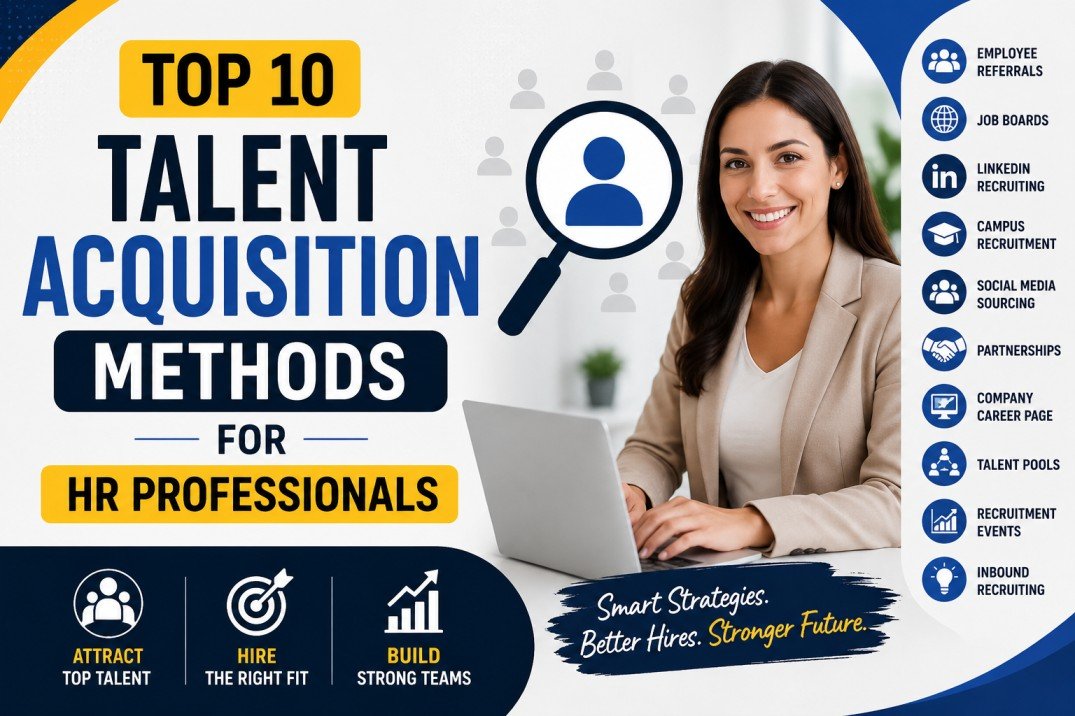
Talent acquisition It’s the backbone of organizational growth and success. Companies that don’t change their hiring ways often fall behind.
Using a proven talent acquisition plan helps teams work better and hire better. By using new methods, you can get the best candidates for your company.
This guide shows the top 10 talent acquisition method for hr professional teams need. Using these strategies will help you build a strong team ready for the future.
Key Takeaways : Talent acquisition
- Modern recruitment is key for business growth.
- Good frameworks make hiring better.
- Streamlining saves time and money.
- Planning keeps you ahead in a tough market.
- Learning these ten methods improves hiring.
Leveraging Data-Driven Recruitment Analytics
Every successful hr executive knows that intuition must be backed by hard data to win the war for talent. Moving beyond gut feelings allows organizations to makeevidence-based hiring decisionsthat align with long-term business goals. By embracing a quantitative approach, companies can identify bottlenecks and refine their outreach strategies with precision.
Establishing Key Performance Indicators
To improve the effectiveness of your talent acquisition efforts, you must first define clear metrics. Establishing Key Performance Indicators (KPIs) provides aroadmap for success, allowing teams to track progress against specific benchmarks. Common metrics include source-of-hire quality, offer acceptance rates, and the cost per hire.
When an hr executive monitors these figures consistently, they gain a clearer picture of what works and what needs adjustment.Data transparencyensures that every member of the recruitment team understands their impact on the bottom line. This structured approach eliminates guesswork and fosters a culture of accountability.
Utilizing Predictive Hiring Software
Modern technology has revolutionized how we forecast candidate potential. Predictive hiring software uses historical data to identify patterns that correlate with long-term employee success. By analyzing these trends, recruiters cansignificantly reduce the time-to-fillfor critical roles while improving the quality of their shortlists.
These advanced tools help mitigate risk by highlighting candidates who possess the specific skills and behavioral traits required for a role. Integrating such software into your talent acquisition workflow creates a moreagile and efficienthiring process. Ultimately, these analytical tools ensure that your organization remains competitive in a rapidly changing labor market.
Building a Strong Employer Brand
Every hr executive knows attracting top talent is more than a job description. It’s about a compelling story. A strong employer brand is key for successful talent acquisition today. By showing your values, you attract candidates who share your mission.
Showcasing Company Culture on Social Media
Social media lets you humanize your company. Instead of boring updates, share real moments from your team. This makes job seekers see themselves as part of your team.
Here are ways to get noticed: Talent acquisition
- Highlight employee milestones and personal achievements.
- Share behind-the-scenes footage of office events or remote team gatherings.
- Feature short video interviews where staff members discuss their career growth.
Managing Online Reputation and Reviews
Job seekers research before applying. An hr executive must watch platforms like Glassdoor and LinkedIn. This keeps your image positive.
Responding to reviews shows you value feedback. This is key for talent acquisition today. Turning negative feedback into a chance to improve shows you care about growth.
“Your brand is what other people say about you when you’re not in the room.”
— Jeff Bezos
A strong reputation is like a silent recruiter. When your team talks up your culture, it proves your brand promise. This is more convincing than any ad.
Implementing Employee Referral Programs
Every hr executive knows the best candidates come from current employees’ networks. This way, companies find people who fit well and stay longer. It’s a cost-effective way to find talent in today’s market.
Designing Incentives for Current Staff
Organizations need to offer rewards that appeal to their team. While cash bonuses are popular, experiential rewards are gaining ground. A good program makes employees want to promote the company.
Here’s a table to help pick the right reward for your company:
| Incentive Type | Primary Benefit | Best For |
| Cash Bonus | High immediate motivation | High-volume hiring |
| Extra PTO Days | Promotes work-life balance | Retention-focused firms |
| Professional Development | Long-term skill growth | Specialized technical roles |
| Charitable Donation | Aligns with company values | Mission-driven organizations |
Streamlining the Referral Submission Process
A hard or slow process can stop even the most eager employees. A good hr executive makes a simple, mobile-friendly portal for uploading resumes. It’s key to keep your talent acquisition smooth and big.
Also, telling employees about their referrals quickly builds trust. When they see their efforts matter, they keep helping. Being open about the hiring process turns your team into a strong recruitment team.
Optimizing Talent Acquisition Strategies Through Social Recruiting
For today’s hr executive, social media is key for talent acquisition. Traditional job boards miss out on top talent. This is because many skilled workers are happy in their jobs.
Using social media, recruiters can connect with great candidates. This way, when a job opens, you already have a list of potential hires.

Targeting Passive Candidates on LinkedIn
LinkedIn is the top spot for professional networking. It gives deep insights into a candidate’s career. To find passive talent, an hr executive needs to do more than just post jobs.
“The best candidates are rarely looking for a job; they are looking for a better opportunity to grow their impact.”
Here are some steps for successful outreach:
- Personalize every connection request to show you have researched their specific achievements.
- Share industry-relevant content that shows your company is a leader.
- Highlight the value proposition of the role, not just the job description.
Engaging Talent Communities on Niche Platforms
Industry-specific platforms connect you with specialized professionals. Sites like GitHub for developers or Behance for designers offer real engagement. This is something regular recruitment can’t match.
To succeed in these communities, you must show real interest. By joining in discussions and sharing your knowledge, you build trust. This makes your talent acquisition efforts seem like a natural part of the industry conversation, not a sales pitch.
Mastering Advanced Boolean Search Techniques
Every successful hr executive knows finding top Talent acquisition is more than basic searches. Standard search bars often give too many irrelevant results. Learning to use specific logical operators helps filter out the noise to find the right professionals.
Constructing Effective Search Strings
The key to precision sourcing is using Boolean operators correctly. Terms like AND, OR, and NOT help narrow or broaden your search. For example, combining job titles with specific skills keeps your talent acquisition focused on quality matches.
When making these strings, keep your logic clear and organized. Use parentheses to group related terms. This ensures the search engine understands your request correctly. This method saves time and boosts the quality of your candidate pool.
“The ability to craft a precise search string is the difference between finding a needle in a haystack and having the needle handed to you.”
Identifying Hidden Talent Pools
Many passive candidates are missed by standard search algorithms. They don’t update their profiles with common keywords. An experienced hr executive can find them by searching for specific certifications or unique project experiences. These hidden gems are often in niche forums, GitHub, or specialized networks.
Improving your search skills lets you find these overlooked professionals first. Targeting specific technical languages or niche jargon gives you an edge. The table below shows how advanced logic improves your search results.
| Search Method | Result Quality | Efficiency |
| Basic Keyword | Low (Too broad) | Slow |
| Boolean Logic | High (Targeted) | Fast |
| Advanced Sourcing | Exceptional | Very Fast |
Mastering these techniques is crucial for modern talent acquisition. Combining technical skill with strategic thinking raises your recruitment game. Try these strings today to see better results right away.
Utilizing Artificial Intelligence in Screening
Every hr executive now sees artificial intelligence as key to better hiring. Smart tech in the early hiring stages boosts talent acquisition results. It lets teams skip manual tasks and engage with candidates more deeply.
Automating Resume Parsing
Manual resume checks take up a lot of time for recruiters. Automated tools quickly scan and sort resumes, finding the right skills and experience. This means no good candidate gets missed because of busy schedules.
This change makes hiring faster. An hr executive can cut down hiring time a lot. The software puts candidate info in easy-to-search databases, helping match the right person for the job. This is key for a modern, effective talent acquisition plan.
Reducing Bias with AI-Driven Assessments
Traditional hiring often has hidden biases. AI assessments evaluate candidates based on skills and performance, not personal info. This makes the process fair and accurate.
Objectivity is the big win here. When all candidates face the same tests, hiring is fairer. Using these tools helps build diverse teams without sacrificing quality or performance.
Developing University and Internship Partnerships
An effective hr executive knows early-career engagement is key for growth. Building a talent pipeline helps companies get top talent early. This ensures a steady flow of new ideas and leaders.
Creating Early-Career Pipelines Talent acquisition
Building strong ties with schools takes more than just job fairs. It means setting up internship programs with meaningful work experience and mentorship. These programs test both the employer and the student.
An hr executive investing in these partnerships gets a steady flow of new talent. This approach saves time and money compared to traditional hiring. It also builds loyalty among students who see the company as a supportive career partner.
“The most successful companies treat campus recruiting as a long-term investment in their future leadership, not just a seasonal task.”
Hosting Virtual Career Fairs
Today’s talent acquisition needs to use tech to reach more students. Virtual career fairs let companies connect with candidates nationwide without travel. These events offer interactive talks and video chats.
To make these events work, companies should communicate clearly and use easy-to-use digital platforms. A smooth experience shows off the company’s culture. Using digital channels for talent acquisition can boost diversity and quality in the applicant pool.
| Channel | Reach | Cost Efficiency | Engagement Level |
| Virtual Career Fairs | National | High | Moderate |
| On-Campus Events | Local | Low | High |
| Internship Programs | Targeted | High | Very High |
Enhancing the Candidate Experience
Every time a candidate talks to your company, it shapes how people see your brand. A smooth journey keeps applicants interested from the start to the end. This is key for your talent acquisition to succeed.

Simplifying the Application Workflow
Long and complicated forms make many candidates drop out. An hr executive should focus on making things easier. This way, the best candidates won’t give up too soon.
Think about using mobile-friendly sites for applications. They should be easy to use, with fewer fields and social profile links. This makes the process user-friendly and shows you value their time.
Providing Timely and Constructive Feedback
Good communication is key to hiring well. Not talking to candidates can hurt your company’s image, whether you hire them or not.
Every candidate should get a professional thank-you note. Giving constructive feedback helps them grow. It also makes them think well of your company, even if they’re not hired.
When an hr executive values openness, it makes your talent acquisition better. Treating everyone with respect makes your brand a great choice for future leaders.
Conducting Structured Behavioral Interviews
Structured behavioral interviews are the gold standard for predicting job performance. They look at how a candidate handled past challenges. This way, an hr executive can judge candidates fairly, not just by how they seem.
Standardizing Evaluation Criteria
Being consistent is key in talent acquisition. If all interviewers ask the same questions and score the same way, bias is less likely. This makes hiring fairer for everyone.
- Develop a standardized scorecard for every role.
- Define clear behavioral indicators for each competency.
- Use a consistent rating scale to evaluate candidate responses.
Using these tools helps ensure fair assessments for all candidates. Here’s how to structure your evaluation process:
| Competency | Behavioral Indicator | Rating Scale (1-5) |
| Problem Solving | Identifies root causes | 1 (Poor) to 5 (Excellent) |
| Teamwork | Supports group goals | 1 (Poor) to 5 (Excellent) |
| Adaptability | Handles change well | 1 (Poor) to 5 (Excellent) |
Training Hiring Managers on Interview Best Practices
Even the best systems fail without well-trained interviewers. An hr executive must train hiring managers to interview without bias.
Training should cover active listening and open-ended questions. Managers should learn to ask for specific details, not general answers. By doing this, your team will make better hiring choices that help your company grow.
Focusing on Diversity, Equity, and Inclusion Initiatives
Diversity, equity, and inclusion are key for a business to succeed today. Every hr executive knows a diverse team drives innovation. Companies that value these principles build strong teams with varied perspectives.
Implementing Blind Recruitment Practices
Many firms now use blind recruitment to reduce bias. They remove personal info from resumes before hiring managers see them. This way, they focus on skills and experience, making hiring fair and based on merit.
This method makes hiring fairer. Recruiters judge candidates based on their work, not who they are. It’s crucial for finding the right person for the job.
Expanding Sourcing Channels for Diverse Talent
Talent acquisition Traditional networks often lead to a similar group of candidates. To find more diverse talent, hr executives need to look elsewhere. They should partner with groups that support underrepresented people and attend diversity-focused events.
By connecting with diverse talent communities, companies find top-notch candidates they might have missed. Looking in different places means more diverse candidates in your system. This is key for modern talent acquisition.
| Strategy | Traditional Approach | Inclusive Approach |
| Resume Review | Manual screening with bias | Blind screening processes |
| Sourcing | Standard job boards | Niche diversity platforms |
| Evaluation | Subjective interviews | Structured, skill-based rubrics |
| Goal | Speed of hire | Quality and representation |
Read Also : How to Start Speaking English 60 Day Beginners ?
Conclusion
Building a strong team needs new ways of finding talent. Each method in the top 10 list is key for growth. Now, you have the tools to make your hiring better.
Winning in today’s job market means using many strategies. Using just one way limits your chances. Mix data, tech, and personal touch to find the best candidates.
Getting great talent is a journey, not a goal. Companies like Google and LinkedIn show that improving these methods pays off. Start using these ideas to improve your hiring now.
Share your success with these methods online. This helps everyone in the industry get better. Start changing your ways today for a better future.
FAQ
What is the most critical top 10 talent acquisition method for HR professional success in a competitive market?
Data-driven recruitment analytics are key. Use platforms like Workday or SAP SuccessFactors. They help set up Key Performance Indicators (KPIs). This turns hiring into a science, improving the quality of hires.
How can an HR executive effectively leverage social recruiting to find specialized talent?
Use LinkedIn Recruiter to find passive candidates. Also, join niche communities like GitHub for developers or Behance for creatives. This way, you can find top talent who might not be looking for jobs.
Why is employer branding on Glassdoor and LinkedIn essential for modern recruitment?
A strong employer brand attracts the best talent. Manage your online reputation and reviews on Glassdoor. Show your company culture on LinkedIn. This builds trust and makes hiring easier.
How does the implementation of AI-driven assessments benefit the screening process?
AI tools like Eightfold.ai or HireVue automate resume parsing and screening. This reduces bias. It ensures candidates are chosen based on merit and fit.
What are the best practices for an HR executive to build a sustainable early-career pipeline?
Focus on university and internship partnerships. Use platforms like Handshake for virtual career fairs. This creates a steady talent flow, ensuring long-term growth.
How can structured behavioral interviews improve hiring accuracy?
Structured interviews are the best for predicting job success. Use platforms like Greenhouse to standardize evaluations. This leads to fair and consistent hiring.
In what way does focusing on diversity, equity, and inclusion (DEI) impact talent acquisition?
DEI initiatives like blind recruitment and using platforms like Jopwell or Mogul expand your talent pool. This creates a diverse and inclusive workplace, driving innovation.
How can companies optimize their employee referral programs to ensure a better cultural fit?
Streamline referral processes with tools like Erin or Radancy. Offer attractive incentives to current staff. This way, you find candidates who fit your culture, leading to better retention.